Esthwaite Water
Esthwaite Water is a small eutrophic lake in the south of the English Lake District. Its outflow, Cunsey Beck, drains into the south basin of Windermere. It was classified as the most productive lake in the English Lake District when W. H. Pearsall made his original classification of eleven Lake District lakes in the 1920s. It has a maximum depth of 15.5m and a surface area of 1.0 km2.
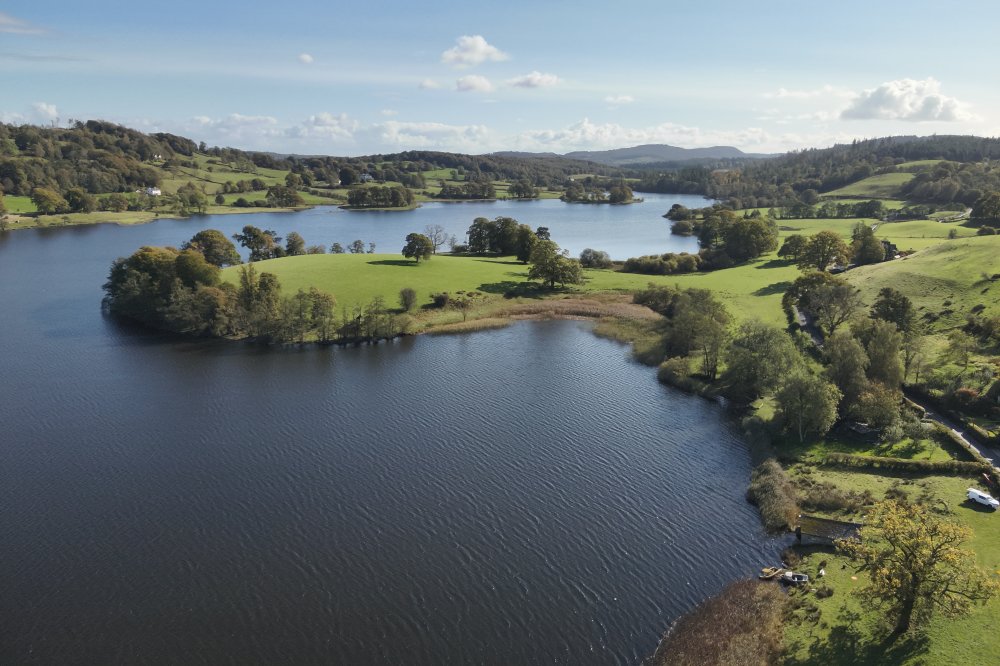
Esthwaite water drone photo, October 2024.
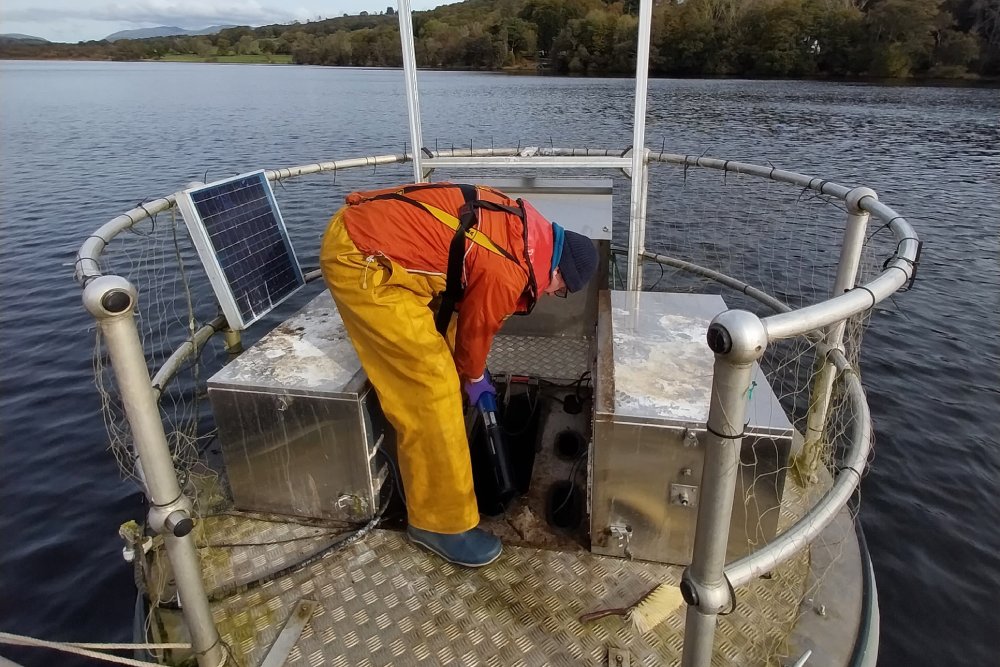
Esthwaite water monitoring buoy.
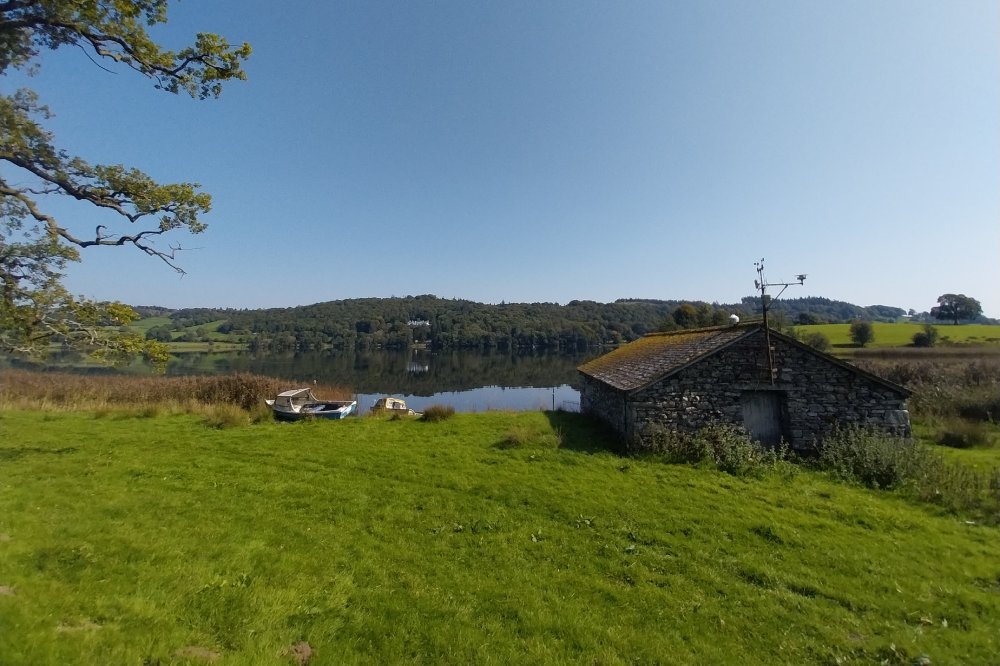
Esthwaite water boathouse.
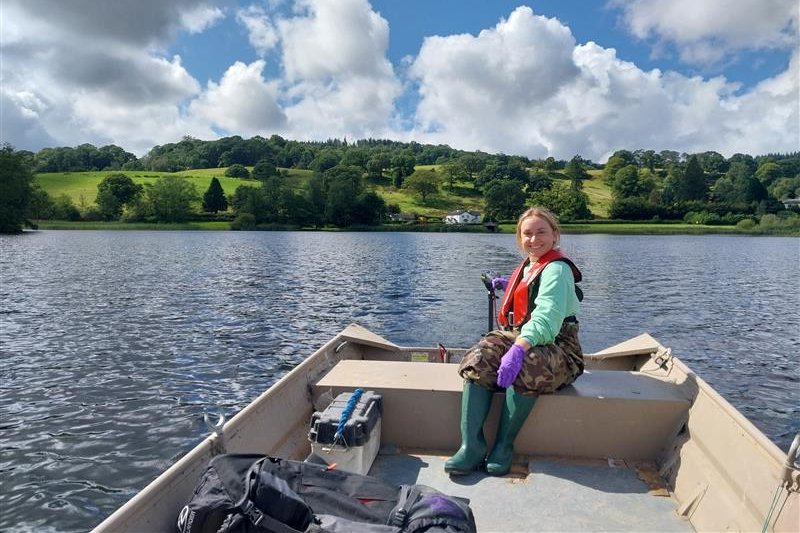
Esthwaite water sampling.
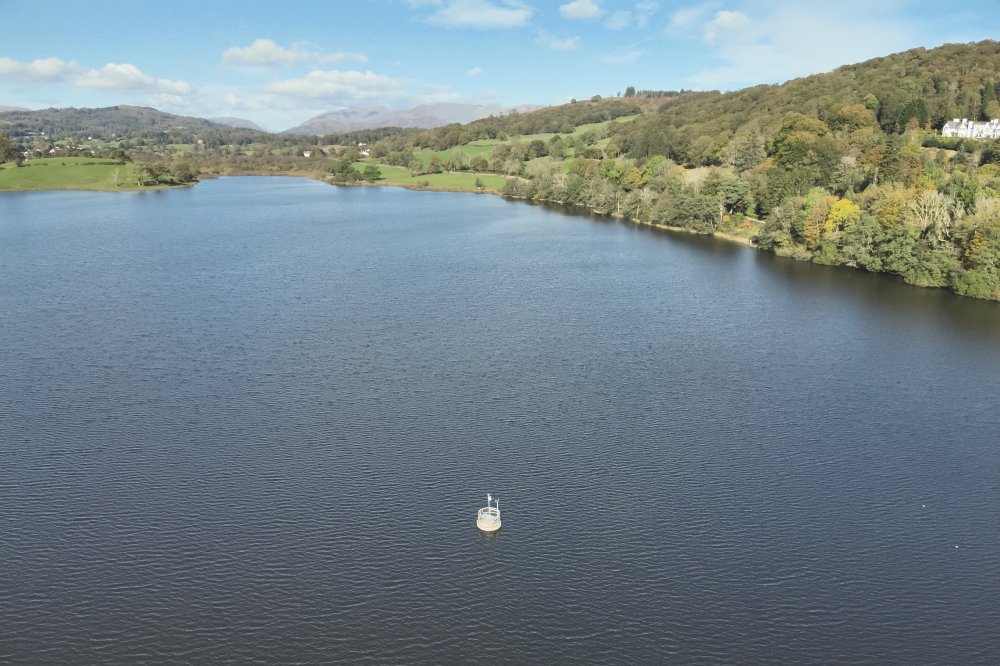
Esthwaite water drone photo, October 2024.
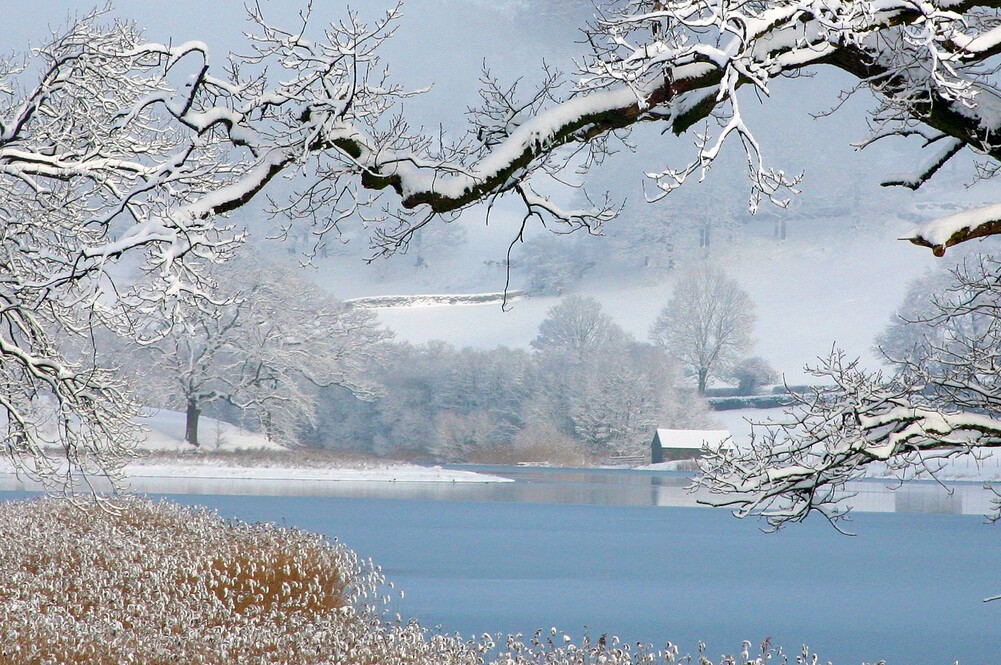
Esthwaite water, winter 2012.
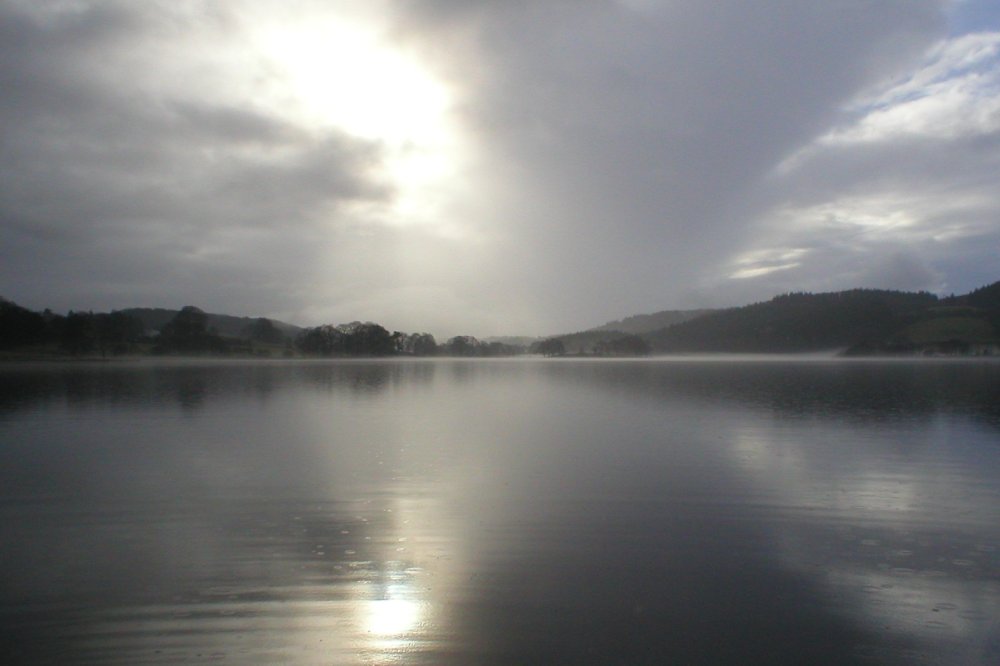
Esthwaite water looking south, 2011.
In the following graphs, you can see the annual concentrations of a selection of determinands from the last few years, averaged over both sampling sites. The graphs also show the long term mean from 1945–2013.
Graph traces can be switched on and off by clicking on the names in the legend.
*Calculated from a dataset spanning 1945–2013.
Total phosphorus comprises total soluble (dissolved) phosphorus and particulate phosphorus. Particulate phosphorus comprises the phosphorus that is contained in, or attached to, particles such as algae and suspended sediments. An important part of soluble phosphorus is soluble reactive phosphorus, which is readily available to algae and enables them to grow rapidly.
Chlorophyll a is a green pigment found in all green plants, including phytoplankton (algae). It absorbs light energy from the sun and converts it into energy that the plant can use, using a process known as photosynthesis. Measurements of chlorophyll a indicate the amount of phytoplankton present in the water.
Water temperature affects the rate of biological processes, such as the growth, respiration, and reproduction of all organisms that live in the loch. It also affects the species composition and abundance of some of those organisms at certain times of year. Water temperature is one of the main environmental factors affected by climate change.
Dissolved oxygen concentrations indicate the amount of oxygen that is present in the water. The oxygen comes from the atmosphere or from aquatic plants. Some aquatic species, such as fish, are very sensitive to low levels of oxygen.
Water clarity, also known as Secchi depth, is a measure of how turbid the water has become due to phytoplankton growth or the resuspension of loch sediments under windy conditions. Turbid conditions prevent underwater plants from growing in deep water. Water clarity is only measured at Reed Bower.